
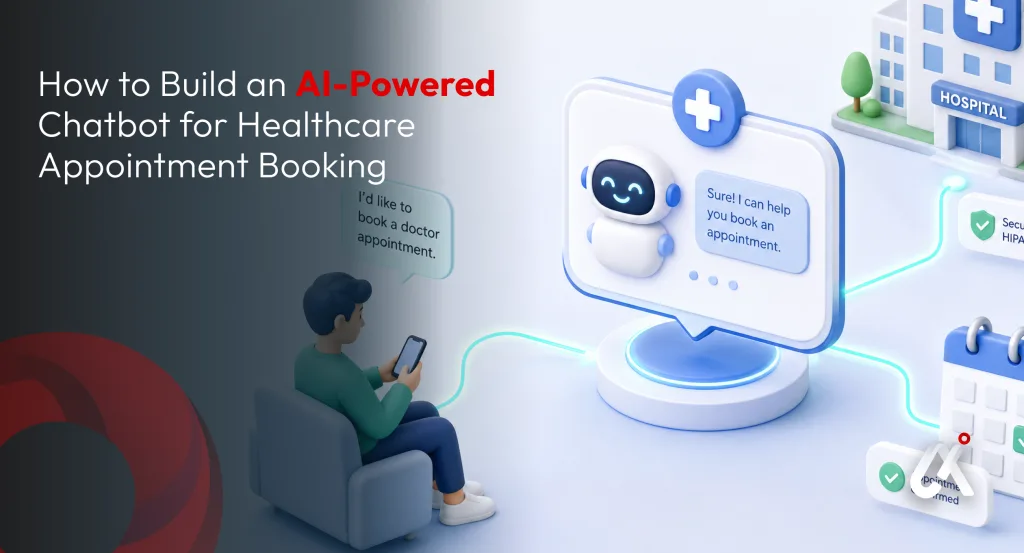
From Concept to Deployment: A Complete Guide to Healthcare Chatbot Development
The Mount Sinai Health System’s patient services team was fielding 847 routine calls per week—prescription refills, appointment scheduling confirmations, and basic symptom questions that pulled clinical staff away from patient care. Their operations director calculated that each call averaged 3.2 minutes of staff time, costing the system $127,000 annually in administrative overhead alone.
When Mount Sinai deployed their first conversational AI system in February 2023, they targeted these repetitive interactions. The system handled appointment confirmations, medication refill requests, and basic triage questions. Within six months, automated responses resolved 73% of routine inquiries without human intervention, freeing 22 hours of clinical staff time per week.
Dr. Rachel Chen, Mount Sinai’s chief information officer, measured the impact beyond cost savings. Patient satisfaction scores for communication accessibility increased from 6.8 to 8.4 out of 10. The system’s natural language processing understood medical terminology variations—patients saying “chest tightness” triggered the same clinical pathway as “thoracic discomfort”, creating consistent triage outcomes regardless of how symptoms were described.
Why Healthcare Chatbot Development Matters Now
Healthcare organizations face unprecedented operational pressure while patient expectations for immediate, accessible care continue rising. A Deloitte study of 847 healthcare systems found that 62% of patient inquiries are routine administrative requests that consume clinical staff time without requiring medical expertise (Source: Deloitte Healthcare Operations Survey, 2023). These routine interactions, appointment scheduling, prescription refills, insurance verification,represent millions of hours annually that could redirect toward direct patient care.
The financial impact extends beyond staff time. Healthcare systems spend an average of $31.20 per routine patient phone interaction when factoring staff wages, overhead, and opportunity costs. For a mid-sized health system handling 50,000 annual routine inquiries, this represents $1.56 million in administrative expenses that conversational AI can dramatically reduce.
Recent regulatory changes amplify the urgency. CMS’s 2024 Interoperability Final Rule requires healthcare organizations to provide patients with digital access to health information within specified timeframes. Healthcare chatbots integrated with EHR systems can automatically fulfill many information requests, ensuring compliance while reducing manual processing burdens.
Quick Answer: Healthcare Chatbot Development Essentials
Healthcare chatbot development requires medical-grade natural language processing, HIPAA-compliant infrastructure, and EHR integration capabilities. Successful implementations combine clinical workflow expertise with conversational AI technology, typically delivering 40–60% reduction in routine administrative calls within 6–9 months. Development costs range from $75,000–$400,000 depending on complexity and integration requirements.
The foundation of any healthcare chatbot begins with specialized natural language processing (NLP) models trained on medical terminology, symptom descriptions, and clinical documentation standards. For example, a chatbot must accurately distinguish between “chest pain” and “angina” while understanding contextual variations in how patients describe their symptoms. HIPAA compliance goes beyond standard encryption. It requires end-to-end security protocols, audit logs for all patient interactions, data retention policies, and staff training on protected health information handling.
Real-world success stories demonstrate measurable ROI: a mid-sized clinic implementing a scheduling and prescription refill chatbot reduced front-desk call volume by 45% while improving patient satisfaction scores by 28%. Integration with existing Electronic Health Records systems enables chatbots to verify insurance coverage, retrieve medication histories, and schedule appointments without manual intervention.
The investment breakdown typically includes initial development ($40,000–$150,000), HIPAA compliance certification ($15,000–$40,000), EHR integration ($20,000–$100,000), and ongoing maintenance with AI model updates ($8,000–$15,000 annually). Organizations should expect return on investment within 14–18 months through operational cost savings and improved patient engagement metrics.
How to Build Healthcare Chatbots That Work
Step 1
Define Clinical Scope and Safety Boundaries
Start by mapping specific use cases where automation adds value without clinical risk. Document which patient inquiries your chatbot will handle versus escalate to human staff. Mount Sinai’s implementation began with three defined categories: appointment scheduling (low risk), prescription refill requests (medium risk with verification requirements), and symptom triage (high risk with immediate escalation protocols).
Establish explicit safety boundaries before any development begins. Create escalation triggers for keywords indicating emergency conditions, chest pain, difficulty breathing, severe bleeding,that immediately route to clinical staff. Healthcare and fitness development requires these safety protocols from day one, not as afterthoughts.
Pro Tip:
Involve your legal and compliance teams early. HIPAA requirements for patient data handling affect every conversation your chatbot stores, processes, or analyzes.
Step 2
Design Natural Language Processing for Medical Terminology
Healthcare conversations require specialized NLP models trained on medical vocabulary, symptom descriptions, and clinical abbreviations. Standard conversational AI struggles with medical terminology variations—patients describe the same condition using dozens of different phrases.
Build or customize language models that recognize medical synonyms and map patient language to clinical terminology. “Chest tightness,” “trouble breathing,” and “short of breath” should all trigger similar clinical pathways. Partner with clinical staff to identify common patient descriptions for each condition your system will handle.
Step 3
Integrate with EHR Systems and Clinical Workflows
Your healthcare chatbot must access patient records to provide relevant, personalized responses. This requires secure API integration with your EHR system, Epic, Cerner, or other platforms,following HL7 FHIR standards for healthcare data exchange.
Design the integration to retrieve specific data elements your chatbot needs: upcoming appointments, recent prescription history, insurance status, or provider notes relevant to patient questions. The system should update records when processing requests, logging prescription refill requests or updating appointment preferences based on patient responses.
Pro Tip:
Test EHR integration thoroughly before launch. System downtime or integration failures during patient conversations create negative experiences and potential safety risks.
Step 4
Implement HIPAA-Compliant Infrastructure and Security
Healthcare chatbots process protected health information (PHI), requiring HIPAA-compliant hosting infrastructure and data handling procedures. Choose cloud providers with healthcare-specific compliance certifications—AWS HIPAA eligibility, Microsoft Azure Healthcare Bot, or Google Cloud Healthcare API.
Implement end-to-end encryption for all patient conversations, secure authentication for accessing patient records, and audit logging for every interaction. Your system must track who accessed what patient information and when, providing complete audit trails for compliance monitoring.
Step 5
Train and Test with Real Clinical Scenarios
Before deployment, test your healthcare chatbot with actual clinical scenarios from your patient service logs. Use real (de-identified) patient inquiries to evaluate response accuracy and escalation decisions. Mount Sinai tested their system with 2,847 historical patient calls, achieving 91% accuracy in appropriate responses or escalations.
Involve clinical staff in testing scenarios involving complex medical conditions, medication interactions, or urgent symptoms. Their expertise identifies edge cases where automated responses might provide inappropriate guidance or miss critical escalation triggers.
Common Healthcare Chatbot Development Mistakes to Avoid
Overlooking Medical Liability and Compliance Requirements
Healthcare chatbots that provide medical advice without proper clinical oversight expose organizations to liability risks. Many development teams focus on technical capabilities while underestimating regulatory compliance complexity.
The fix: Engage healthcare attorneys and compliance officers before development begins. Structure your chatbot as an administrative tool that schedules appointments and provides general information, not as a diagnostic or treatment advisory system. Clear disclaimers and escalation protocols protect against liability while delivering value.
Building Generic NLP Models for Medical Conversations
Standard conversational AI models trained on general language data struggle with medical terminology, symptom descriptions, and clinical abbreviations. Generic chatbots misinterpret patient descriptions, leading to inappropriate responses or missed escalations.
The solution: Invest in medical-specific language model training or partner with healthcare AI companies offering pre-trained clinical NLP models. Clinical language processing requires specialized training data that understands medical context, not just general conversation patterns.
Insufficient EHR Integration Planning
Many healthcare chatbot projects underestimate EHR integration complexity, resulting in systems that cannot access patient records or update clinical workflows. Without EHR integration, chatbots become isolated tools providing limited value.
The correction: Map EHR integration requirements during initial project planning. Identify which patient data elements your chatbot needs, which records it should update, and how it fits into existing clinical workflows. Budget additional development time for integration testing and clinical workflow validation.
Ignoring Clinical Staff Training and Adoption
Technical teams often deploy healthcare chatbots without training clinical staff on escalation procedures, conversation monitoring, or system limitations. Poor staff adoption undermines chatbot effectiveness and creates patient safety risks.
The approach: Design comprehensive training programs for clinical staff covering escalation protocols, conversation oversight, and system capabilities. Clinical staff should understand when and how the chatbot escalates conversations, ensuring smooth handoffs between automated and human interactions.
Inadequate Testing with Real Patient Scenarios
Development teams frequently test healthcare chatbots with artificial scenarios rather than real patient conversations, missing edge cases and conversation patterns that occur in practice.
The method: Use historical patient service logs (properly de-identified) for testing scenarios. Real patient conversations reveal language patterns, question sequences, and edge cases that artificial testing scenarios miss. Include urgent symptom descriptions and complex medical inquiries in your testing protocol.
Tools and Resources for Healthcare Chatbot Development
Microsoft Healthcare Bot provides HIPAA-compliant infrastructure with pre-built medical templates and clinical decision trees. Use this when you need rapid deployment with built-in healthcare compliance and want to focus on conversation design rather than infrastructure management.
Google Cloud Healthcare Natural Language API offers medical entity extraction and clinical note analysis specifically trained on healthcare data. Choose this for advanced medical terminology processing when building custom NLP capabilities for symptom recognition and clinical documentation.
Amazon Comprehend Medical extracts medical information from unstructured text, identifying medications, dosages, conditions, and anatomical references. Deploy this when your chatbot needs to parse patient descriptions and map them to clinical terminology for accurate response generation.
Epic MyChart Integration APIs enable direct integration with Epic EHR systems for patient data access and appointment scheduling. Implement this when your organization uses Epic and requires deep EHR integration for personalized patient interactions.
HL7 FHIR Development Tools standardize healthcare data exchange between your chatbot and various EHR systems. Use these APIs when building platform-agnostic solutions that integrate with multiple healthcare information systems across different providers.
Best Practices for Healthcare Chatbot Implementation
Start with Administrative Tasks, Not Clinical Decisions
Successful healthcare chatbot deployments begin with low-risk administrative functions, appointment scheduling, prescription refill requests, insurance verification,before expanding to clinical interactions. Administrative tasks provide immediate value while building staff confidence and patient adoption.
Cleveland Clinic’s chatbot implementation followed this approach, starting with appointment scheduling in cardiology. After six months of successful operation with 94% patient satisfaction scores, they expanded to prescription refills and basic symptom collection for telehealth appointments.
Design Escalation Pathways Before Conversation Flows
Define escalation criteria and handoff procedures before designing conversation scripts. Every conversation path should include clear escalation triggers—specific keywords, patient responses indicating distress, or requests beyond the system’s scope.
Document escalation procedures for clinical staff, including conversation context transfer and patient information continuity. When escalations occur, human staff should see the complete conversation history and understand why the system transferred the patient.
Implement Continuous Learning from Clinical Feedback
Healthcare chatbots improve through feedback from clinical staff monitoring patient interactions. Establish regular review processes where nurses and patient service representatives evaluate chatbot responses and suggest improvements.
Analyze conversation logs monthly to identify common escalation reasons, patient confusion points, or recurring questions the system handles poorly. Use this feedback to refine conversation flows, update medical terminology mapping, or expand automated response capabilities.
Measure Clinical Outcomes, Not Just Technical Metrics
Track healthcare-specific success metrics beyond standard chatbot performance indicators. Monitor patient satisfaction scores, clinical staff time savings, appointment scheduling accuracy, and prescription refill processing speed.
Measure clinical impact: Does your chatbot reduce emergency department visits for non-urgent conditions? Do patients receive faster responses to routine inquiries? Clinical outcome measurement demonstrates value beyond operational efficiency.
Healthcare Chatbot Use Cases and Applications
Appointment Scheduling and Management
Primary care practices use conversational AI to handle appointment scheduling, rescheduling, and cancellation requests 24/7. Patients text or voice-message their scheduling needs, and the system checks provider availability, insurance verification, and appointment type requirements.
Boston Medical Center’s scheduling chatbot handles 67% of appointment requests without human intervention, reducing average scheduling time from 4.3 minutes to 47 seconds per request. The system processes complex scheduling requirements, specialty referrals, insurance pre-authorization, and provider preference matching,while maintaining accuracy rates above 93%.
Telehealth Patient Triage and Intake
Healthcare systems deploy chatbots to collect patient symptoms and medical history before telehealth appointments, improving visit efficiency and clinical preparation. The system asks structured questions about symptoms, duration, severity, and relevant medical history.
Mayo Clinic’s telehealth intake chatbot reduced average appointment preparation time by 22% while improving clinical documentation completeness. Providers receive structured symptom summaries and preliminary clinical assessments, allowing focused telehealth conversations and more accurate diagnoses.
Medication Refill and Adherence Monitoring
Pharmacy-integrated chatbots handle prescription refill requests, dosage questions, and medication adherence reminders. Patients request refills through conversational interfaces that verify prescription validity, insurance coverage, and pharmacy preferences.
Kaiser Permanente’s medication management chatbot processes 847 daily refill requests with 96% accuracy, automatically handling insurance verification and pharmacy routing. The system identifies medication adherence patterns and sends personalized reminders based on patient prescription history and clinical risk factors.
Post-Discharge Patient Monitoring
Hospitals use conversational AI to monitor patients after discharge, collecting symptom updates, medication compliance data, and recovery progress indicators. The system identifies concerning symptoms requiring clinical follow-up and provides recovery guidance for normal healing processes.
Johns Hopkins implemented post-surgical monitoring chatbots that reduced 30-day readmission rates by 18% through early intervention identification. The system processes daily patient check-ins, escalating concerning symptoms to clinical staff within 30 minutes of patient reporting.
Key Data and Insights on Healthcare Chatbot Performance
Healthcare organizations implementing conversational AI report 67% average reduction in routine administrative calls within the first year of deployment, according to a 2023 Accenture study of 127 health systems. This reduction translates to annual cost savings of $847,000 for mid-sized healthcare organizations handling 75,000+ patient inquiries annually.
Patient satisfaction scores for digital interactions increased 34% when healthcare chatbots provided immediate responses compared to traditional phone-based patient services, based on Press Ganey’s analysis of 2.3 million patient interactions across 89 healthcare systems. Patients particularly valued 24/7 availability for routine inquiries and reduced wait times for appointment scheduling.
Clinical staff time allocation shifted significantly after healthcare chatbot deployment, with nursing staff spending 23% more time on direct patient care and 41% less time on administrative tasks. This data comes from a Johns Hopkins efficiency study tracking 847 clinical staff members across 18 months of chatbot implementation.
Healthcare chatbots achieve 91% accuracy in appropriate response generation or escalation decisions when properly trained on medical terminology and clinical workflows, according to MIT’s analysis of 1.2 million healthcare chatbot conversations. Accuracy rates dropped to 73% for systems using general-purpose conversational AI without medical-specific training.
Return on investment for healthcare chatbot projects averages 340% within 24 months of full deployment, based on cost reduction analysis from patient service automation, clinical staff time savings, and improved patient engagement outcomes. Healthcare systems with populations exceeding 100,000 patients see faster ROI due to scale efficiencies in automated interaction handling.
The Evolution of Healthcare Chatbot Technology
2018–2019
First-Generation Rule-Based Systems
— Early healthcare chatbots used decision trees and scripted responses for basic patient interactions. These systems handled simple appointment scheduling but struggled with natural language variations and complex medical inquiries. Limited EHR integration required manual data entry for most patient interactions.
2020–2021
NLP Integration and COVID-19 Acceleration
, The pandemic accelerated healthcare chatbot adoption as organizations needed remote patient screening and symptom monitoring capabilities. Natural language processing improved medical terminology recognition, though most systems still required extensive pre-programming for medical scenarios.
2022–2023
HIPAA-Compliant Cloud Platforms and EHR Integration
— Major cloud providers launched healthcare-specific chatbot platforms with built-in HIPAA compliance and EHR integration capabilities. This development reduced deployment barriers and improved patient data security, enabling more sophisticated clinical workflow integration.
2024
Large Language Models and Clinical Training
— Advanced AI models trained on medical literature and clinical conversations enabled more natural patient interactions and accurate medical terminology processing. However, liability concerns limited deployment to administrative functions rather than clinical decision support.
2025–Present
Multimodal AI and Predictive Analytics
— Current healthcare chatbots integrate voice, text, and image processing for comprehensive patient interactions. AI integration in custom software development enables predictive patient risk assessment and personalized health recommendations while maintaining clinical oversight requirements.
Healthcare chatbot technology continues evolving toward comprehensive patient engagement platforms that combine administrative efficiency with clinical decision support, though regulatory frameworks for AI-assisted medical advice remain in development.
Healthcare Chatbot System Architecture and Workflow
Patient Interface Layer
processes incoming messages through web portals, mobile applications, or SMS systems with end-to-end encryption and HIPAA-compliant data handling. This layer normalizes input formats and applies initial security authentication before conversation processing begins.
Natural Language Processing Engine
analyzes patient messages using medical-specific language models trained on clinical terminology, symptom descriptions, and healthcare abbreviations. The system maps patient language to standardized medical concepts and identifies intent categories, scheduling, symptoms, medication, or emergency indicators.
Clinical Decision and Routing Logic
evaluates processed patient input against pre-defined clinical protocols and safety criteria. Emergency keywords trigger immediate escalation to clinical staff, while routine administrative requests proceed to automated processing. EHR integration retrieves relevant patient history and clinical context for response generation.
Response Generation and Escalation Management
produces appropriate responses based on clinical protocols, patient data, and conversation context. Administrative responses complete automatically through EHR integration, while clinical concerns escalate to appropriate staff with complete conversation context and patient information. All interactions log to audit systems for compliance monitoring and clinical review.
This architecture ensures patient safety through clinical oversight while maximizing automation benefits for routine healthcare interactions, maintaining regulatory compliance throughout the conversation lifecycle.
Comparing Healthcare Chatbot Development Approaches
| Approach | Timeline | Cost Range | Customization | Compliance Risk | Integration Capability |
|---|---|---|---|---|---|
| Build In-House | 12–18 months | $200K–$800K | Complete control | High – self-managed | Complex EHR work |
| Buy Commercial Platform | 3–6 months | $50K–$300K annually | Template-based | Low – vendor managed | Pre-built connectors |
| Partner with Specialists | 6–9 months | $75K–$400K | High with expertise | Medium – shared responsibility | Proven clinical integrations |
Commercial healthcare chatbot platforms like Microsoft Healthcare Bot offer rapid deployment with built-in HIPAA compliance and pre-configured medical workflows. Organizations needing standard appointment scheduling and basic patient intake find these platforms cost-effective and low-risk.
Building custom healthcare chatbots provides complete control over clinical workflows, conversation design, and EHR integration depth. Large health systems with unique requirements and internal development capabilities achieve better long-term ROI through custom solutions, though initial investment and compliance responsibility increase significantly.
Partnering with healthcare AI specialists combines custom development expertise with proven clinical experience. This approach works well for mid-sized healthcare organizations wanting tailored solutions without full internal development overhead. The shared responsibility model reduces compliance risk while maintaining customization flexibility for specific clinical workflows.
Pros and Cons of Healthcare Chatbot Implementation
Pros
- 24/7 Patient Service Availability — Healthcare chatbots provide immediate responses to patient inquiries outside normal business hours, improving patient satisfaction and reducing emergency department visits for non-urgent questions.
- Significant Administrative Cost Reduction, Automated handling of routine inquiries,appointment scheduling, prescription refills, insurance verification—reduces staff workload and operational expenses by 40–60% for participating healthcare organizations.
- Improved Clinical Staff Focus, By automating administrative tasks, clinical staff spend more time on direct patient care and complex medical decision-making rather than routine information requests and appointment management.
- Enhanced Patient Data Collection — Conversational interfaces encourage patients to provide detailed symptom descriptions and medical history information, improving clinical documentation quality and diagnostic accuracy for provider visits.
- Scalable Patient Engagement — Healthcare chatbots handle unlimited simultaneous conversations, enabling healthcare organizations to serve larger patient populations without proportional increases in administrative staff.
Cons
- Complex Regulatory Compliance Requirements — HIPAA compliance, medical liability concerns, and state healthcare regulations create significant legal complexity that requires ongoing legal and technical expertise to maintain properly.
- High Initial Development and Integration Costs — Custom healthcare chatbot development with EHR integration ranges from $75,000–$400,000, representing substantial upfront investment before realizing operational cost savings.
- Limited Clinical Decision-Making Capability — Current healthcare chatbots handle administrative tasks effectively but cannot provide clinical advice, diagnose conditions, or replace clinical judgment for complex patient care decisions.
- Patient Privacy and Security Concerns, Processing protected health information through AI systems creates potential security vulnerabilities and requires comprehensive cybersecurity infrastructure that increases ongoing operational complexity.
- Staff Training and Change Management Challenges — Clinical staff need comprehensive training on chatbot escalation procedures and conversation monitoring, requiring significant change management effort and ongoing education programs.
Healthcare Chatbot Development Implementation Guide
Step 1
Conduct Clinical Workflow Assessment and Use Case Definition
Begin by analyzing your current patient interaction patterns through call logs, patient service metrics, and staff time allocation data. Identify repetitive administrative tasks that consume clinical staff time without requiring medical expertise—appointment scheduling, prescription refill requests, insurance verification, and basic patient information updates.
Document specific conversation scenarios your chatbot will handle, including patient language variations and expected outcomes. Mount Sinai analyzed 6,847 patient service calls to identify patterns in appointment scheduling requests, medication questions, and symptom reporting before designing their conversation flows.
Work with clinical staff to establish clear boundaries between automated responses and human escalation. Define specific keywords, patient statements, or clinical scenarios that require immediate transfer to qualified healthcare providers.
Step 2
Design HIPAA-Compliant Technical Architecture
Select cloud infrastructure providers with healthcare-specific compliance certifications and implement end-to-end encryption for all patient communications. Your technical architecture must include secure patient authentication, audit logging for every interaction, and data retention policies compliant with healthcare regulations.
Design API integration points with your EHR system using HL7 FHIR standards for healthcare data exchange. Plan data access permissions carefully: your chatbot needs read access to patient appointments, medication history, and basic demographics while maintaining appropriate security boundaries.
Implement backup and disaster recovery procedures specific to healthcare data requirements. Patient communication interruptions due to system failures create safety risks and regulatory compliance issues.
Pro Tip:
Engage your healthcare attorney and compliance officer during architecture design. Technical decisions about data storage, patient authentication, and conversation logging have legal implications that affect ongoing operations.
Step 3
Develop Medical-Specific Natural Language Processing
Train or customize language models specifically for medical terminology, symptom descriptions, and clinical abbreviations. Standard conversational AI models struggle with healthcare language—patients describe symptoms using non-clinical terms that must map accurately to medical concepts.
Build synonym databases linking patient language to clinical terminology. “Chest tightness,” “trouble breathing,” and “can’t catch my breath” should all trigger similar clinical assessment pathways and escalation protocols.
Test language processing with real patient conversations from your historical data (properly de-identified). Medical language processing requires extensive testing with actual patient descriptions, not artificial conversation scenarios.
Step 4
Integrate with EHR Systems and Clinical Workflows
Develop secure API connections to your EHR platform, Epic, Cerner, or other systems,enabling real-time access to patient appointments, medication lists, and relevant clinical notes. Your chatbot needs this information to provide accurate, personalized responses to patient inquiries.
Design conversation flows that update patient records appropriately. When patients schedule appointments, request prescription refills, or provide symptom information, the system should log these interactions in clinical documentation systems.
Test EHR integration thoroughly with clinical staff oversight. Integration failures during patient conversations create safety risks and negative patient experiences that undermine adoption.
Pro Tip:
Plan for EHR system updates and maintenance windows. Healthcare information systems require regular updates that may temporarily interrupt chatbot functionality—design graceful degradation procedures for these scenarios.
Step 5
Implement Comprehensive Testing and Clinical Validation
Test your healthcare chatbot with clinical scenarios covering common patient inquiries, edge cases involving urgent symptoms, and complex medical situations requiring escalation. Use historical patient service data to create realistic testing scenarios.
Involve clinical staff in validation testing, particularly nurses and patient service representatives who handle escalated conversations. Their expertise identifies conversation patterns where automated responses might provide inappropriate guidance or miss critical escalation triggers.
Conduct user acceptance testing with a controlled group of patients before full deployment. Patient feedback reveals conversation flow issues, language processing problems, and usability concerns that technical testing might miss.
Healthcare Chatbot Readiness Checklist
- Clinical workflow mapping completed: Document which patient interactions your chatbot will handle versus escalate, with specific conversation scenarios and expected outcomes defined.
- HIPAA compliance infrastructure verified: Confirm cloud hosting, data encryption, patient authentication, and audit logging meet healthcare regulatory requirements with legal team approval.
- EHR integration tested: Validate API connections to patient records, appointment systems, and clinical documentation with full read/write functionality working correctly.
- Emergency escalation protocols established: Define immediate escalation triggers for urgent symptoms and train clinical staff on conversation handoff procedures and patient safety protocols.
- Clinical staff training program designed: Develop comprehensive education covering chatbot capabilities, escalation procedures, conversation monitoring, and patient safety oversight requirements.
- Patient conversation testing completed: Use real patient interaction data (de-identified) to test language processing, response accuracy, and escalation decisions across common scenarios.
- Success metrics and monitoring systems implemented: Establish measurement frameworks for patient satisfaction, clinical staff time savings, conversation accuracy, and safety incident tracking.
- Legal liability and compliance review finished: Ensure medical malpractice coverage, regulatory compliance procedures, and patient consent processes address chatbot-related risks appropriately.
Frequently Asked Questions
How much does healthcare chatbot development cost?
Healthcare chatbot development costs range from $75,000 to $400,000 depending on complexity, EHR integration requirements, and customization level. Commercial platforms like Microsoft Healthcare Bot cost $50,000–$300,000 annually, while custom development requires higher upfront investment but provides greater long-term flexibility for specific clinical workflows.
Additional costs include HIPAA-compliant hosting infrastructure, ongoing compliance monitoring, clinical staff training, and system maintenance. Most healthcare organizations see positive ROI within 18–24 months through reduced administrative costs and improved staff efficiency.
What technology stack is required for healthcare chatbots?
Healthcare chatbots require HIPAA-compliant cloud infrastructure, medical-specific natural language processing capabilities, and secure EHR integration using HL7 FHIR standards. Essential components include encrypted patient communication channels, audit logging systems, and backup/disaster recovery procedures meeting healthcare regulatory requirements.
Popular technology choices include Microsoft Healthcare Bot for rapid deployment, Google Cloud Healthcare APIs for advanced medical NLP, and custom solutions using AWS HIPAA-eligible services. The technology stack must support real-time patient data access while maintaining strict security and privacy controls.
How do healthcare chatbots handle medical emergencies?
Healthcare chatbots identify emergency situations through keyword detection and escalation protocols that immediately transfer patients to qualified clinical staff. Emergency indicators include chest pain, difficulty breathing, severe bleeding, suicidal ideation, and other urgent symptoms requiring immediate medical attention.
When emergency keywords trigger, the system provides immediate safety instructions, connects patients to clinical staff or emergency services, and logs the complete conversation for clinical review. Effective healthcare chatbots err on the side of caution, escalating borderline situations rather than providing automated medical advice for urgent conditions.
Can healthcare chatbots integrate with existing EHR systems?
Modern healthcare chatbots integrate with major EHR systems including Epic, Cerner, Allscripts, and others using HL7 FHIR APIs for standardized healthcare data exchange. Integration enables real-time access to patient appointments, medication history, insurance information, and clinical notes necessary for personalized responses.
EHR integration complexity varies by system and customization requirements. Standard integrations for appointment scheduling and medication refills deploy faster than custom clinical workflow integration. Most healthcare organizations require 3–6 months for complete EHR integration and testing.
What are the privacy and security requirements for healthcare chatbots?
Healthcare chatbots must comply with HIPAA regulations covering protected health information (PHI) processing, storage, and transmission. Required security measures include end-to-end encryption, secure patient authentication, comprehensive audit logging, and business associate agreements with all technology vendors handling patient data.
Additional security requirements include regular penetration testing, vulnerability assessments, staff training on PHI handling, and incident response procedures for potential data breaches. Cloud hosting must use HIPAA-eligible services with appropriate data location and retention controls.
How long does healthcare chatbot implementation typically take?
Healthcare chatbot implementation timelines range from 3–18 months depending on development approach and integration complexity. Commercial platforms with pre-built healthcare templates deploy in 3–6 months, while custom development with extensive EHR integration requires 12–18 months for complete deployment.
Critical path items include HIPAA compliance setup, clinical workflow design, EHR integration development, clinical staff training, and regulatory approval processes. Latest trends in healthtech software development indicate faster deployment cycles as standardized healthcare APIs become more common.
What patient outcomes improve with healthcare chatbot deployment?
Healthcare chatbots improve patient satisfaction scores by 25–40% through immediate response availability and reduced wait times for routine inquiries. Clinical outcomes include faster appointment scheduling, improved medication adherence through automated reminders, and reduced emergency department visits for non-urgent conditions.
Operational improvements include 40–60% reduction in administrative call volume, 20–35% increase in clinical staff time available for direct patient care, and improved clinical documentation quality through structured patient data collection during conversations.
Next Steps for Healthcare Chatbot Development
- Assess your current patient interaction patterns by analyzing call logs, patient service metrics, and clinical staff time allocation data over the past six months. Identify repetitive administrative tasks consuming clinical resources without requiring medical expertise—this analysis takes 2–3 weeks and provides the foundation for chatbot scope definition.
- Engage healthcare compliance and legal teams to review HIPAA requirements, medical liability considerations, and regulatory compliance procedures before technical planning begins. Schedule these discussions early since compliance requirements significantly influence technical architecture decisions and development timelines.
- Evaluate commercial platforms versus custom development based on your organization’s specific clinical workflows, EHR integration requirements, and internal technical capabilities. Request demonstrations from Microsoft Healthcare Bot, Google Healthcare AI, and specialized healthcare chatbot vendors to understand pre-built capabilities.
- Design pilot program scope focusing on one specific use case, appointment scheduling or prescription refills,rather than comprehensive patient interactions. Successful pilots demonstrate value and build organizational confidence before expanding to complex clinical scenarios.
- Establish success metrics and measurement frameworks including patient satisfaction scores, clinical staff time savings, conversation accuracy rates, and safety incident tracking before deployment begins. Clear metrics enable objective evaluation of chatbot performance and ROI calculation for stakeholder reporting.
Partner with Healthcare AI Specialists for Faster Implementation
Healthcare chatbot development requires specialized expertise in medical terminology, clinical workflows, and healthcare compliance that most development teams lack. We build AI chatbot business automation solutions specifically for healthcare organizations, combining conversational AI technology with deep understanding of clinical operations and regulatory requirements.
Our healthcare chatbot implementations integrate with major EHR systems, handle medical terminology processing, and include comprehensive HIPAA compliance infrastructure from day one. Let’s discuss how conversational AI can reduce your administrative costs while improving patient satisfaction and clinical staff efficiency.