Generative AI Development Services That Start by Naming Which Build You Need
Several quite different builds hide behind this one term and they differ by an order of magnitude in cost. Getting the build wrong is the expensive mistake here, so our generative AI development services name it in writing before a quote exists.
Get Your Build Identified 5.0
5.0 5.0
5.0 4.3
4.3 4.8
4.8Why Generative AI Development Services Differ by an Order of Magnitude
Almost every enquiry for generative AI development services is one of a short list of things. Telling them apart takes one conversation and saves a great deal of money.
They are: making a model answer from your own material, making a reliable product out of something that worked in a demo, making the output sound like your organisation, and connecting the output to a system so a person stops retyping it. They share a technology and share very little else. The effort between the cheapest and the most expensive spans roughly an order of magnitude.
What makes the mistake costly is that they all look the same at the pitch stage. A client describes a symptom, a supplier hears a build it prefers, and the quote reflects that preference rather than the client’s actual problem. So the first deliverable from this generative AI development company is the build, named in writing, with the reasoning, before anybody prices anything.
If it is not clear that generative is the right family at all · If the problem is prediction rather than generation
Our Generative AI Team, in Numbers
The team, the solutions shipped and the retention behind our generative builds.
60+
AI Engineers
50+
AI Solutions Delivered
80+
AI-Integrated Workflows
30+
Industries Served
95%
Client Retention
Our Generative AI Development Services, Told Apart by the Symptom Each One Fixes
Read these as a diagnosis rather than a menu. The symptom named in each entry identifies which build you need, and most enquiries match exactly one of them.
RAG and Knowledge Grounding
We connect the model to your documents, policies and data, with citations attached to what it says, because a model with no access to your material answers from general knowledge and that is how it invents facts about your business. This is the least expensive build on this page and the one most often skipped in favour of something more impressive. Where retrieval quality is itself the hard problem, it becomes RAG development.
Evaluation, Guardrails and Production Hardening
We build the evaluation harnesses, guardrails, fallback behaviour, cost control and observability that carry a demo through real input at real volume. The fix is engineering rather than modelling, and this is where most generative AI budgets actually go once a project is honest about production.
Prompt Engineering and Model Fine-Tuning
We fix output that is correct but in the wrong register, missing the vocabulary and conventions your organisation uses. Structured prompting with worked examples solves most of it, and occasionally it genuinely needs fine-tuning. We test the cheap route first and tell you either way, because the gap between the two is the difference between a low cost and a high one.
Workflow and Agent Integration
We get the output into the system that needs it, in the format that system accepts, with a human approval step where the stakes require one. The generation usually works and the workflow does not, so somebody ends up retyping the result into another system. Cost varies with the target system rather than with the AI, and the AI is rarely the difficult part.
Generative AI Consulting and Build Selection
We work out which of these builds you actually need, before anybody quotes one. The assessment sometimes concludes that generative is the wrong family altogether: prediction, classification, ranking and forecasting are machine learning problems and are usually cheaper, more reliable and easier to evaluate. We give that recommendation more often than clients expect.
Content and Document Generation at Scale
We define the output standard first, build the pipeline that holds it, and put a human approval step exactly where a wrong sentence would cost something, so text, documents, summaries, product copy or code arrive to a consistent standard rather than one at a time. This is the build people picture when they say generative AI, and it is rarely the one they need first.
Generative AI Projects We Have Delivered, and What Each One Became
Each card names the build the client arrived asking for and the one that was actually delivered. The gap between those two is what this page exists to close.
Marketplace
Building the AI Layer Behind a Live Marketplace Without Touching Checkout
The marketplace was already live and taking payments, which ruled out rebuilding it. The AI layer runs as a separate FastAPI service, so models can change without redeploying the code that handles checkout.
Read case study: Building the AI Layer Behind a Live Marketplace Without Touching CheckoutMarketplace
An AI Freelance Marketplace Platform That Turns Site Audits Into One-Click Hires
Nine years with one client, and the most recent phase changed what the product is. Legiit went from listing gigs to telling a business what is wrong with its website and which seller can fix it.
Read case study: An AI Freelance Marketplace Platform That Turns Site Audits Into One-Click HiresWhat Working With Us Is Actually Like
The teams we build for describe the work in their own words, on platforms that verify the engagement before a review is published.

Hardik was very helpful in advice and completing the work.

We have contracted a developer from Aipxperts now for several months, based on a referral. We have been very pleased with the quality of the work, the knowledge and skill level of our developer, and the value we're receiving for our fee. We also very much appreciate that the development team works at night (effectively), so we are sometimes able to turn client requests around in a day.There have been a couple of situations where we needed urgent help outside of our developer's normal business hours, and we've received that help (for which I am very grateful). While we have some challenges with communication sometimes, our overall satisfaction level is very high.
Where Generative AI Pays Off in Your Industry
What we build differs less by sector than the reason for building it does. Each entry names the generative AI work we most often deliver in that industry, and the failure that makes it urgent.
Financial services
Almost always grounding first. The failure that matters in financial services is a confident statement about a product or a rate that is not what the institution offers, and generic model knowledge produces exactly that.
Telecom
Grounding plus a hard approval step. Generated telecom communications go out at a volume where a systematic error reaches millions before anybody reads one, so the gate is part of the build rather than a policy sitting beside it.
eCommerce
Usually voice and volume: product copy, descriptions and category text at a scale nobody can write by hand. The work in eCommerce is consistency and brand register rather than accuracy, which makes it the least risky build on this list.
Retail
Integration more often than generation. The output has to land in a retail product information system in a format it accepts, and the merchandising team has to be able to approve or reject in bulk.
Manufacturing
Grounding against technical documentation that is long, versioned and occasionally contradictory. In manufacturing, establishing which document version is authoritative is most of the engagement and it is rarely anybody’s job beforehand.
Education and EdTech
Content generation with an approval workflow, because material reaching learners carries an accuracy and an age-appropriateness obligation. In education and EdTech the review step shapes the product rather than sitting behind it.
Mobile games
Asset, dialogue and localisation support at volume, where the constraint is consistency with an established world rather than factual accuracy. Mobile games need reference material and style enforcement more than they need grounding.
Why Choose Aipxperts for Generative AI Development
Every generative AI development company promises good work, so promises are worth nothing on their own. What follows is the opposite: the specific things we will not sell you, each one checkable.
01You get the build named in writing before you get a priceWhich build this is, why, and what would change the answer. A quote that arrives without that reasoning is a quote for the supplier’s preferred build.
02The cheapest route that could solve it is tested first, or the reason it cannot is statedPrompting and grounding before tuning. Tuning is more interesting to build and more expensive to commission, and it is genuinely necessary far less often than the market implies.
03Nothing gets bundledEach build is priced and delivered on its own. Bundling them means a client pays for several to get the one they needed, and cannot tell afterwards which part worked.
04“None of these” is an available answer, and it gets givenPrediction, classification and ranking problems get sent to machine learning. Problems that are really a broken process get sent back to the process. Both recommendations cost us the sale and both get made.
05And one thing this team does not doNobody here trains foundation models. These are commercially available models, grounded, configured and engineered around. A supplier implying they build models from scratch at this price is selling something other than what the words suggest.
How to Tell Which Build You Need, and Roughly What Each Costs
Working out which build you need is the generative AI consulting services part of this, and it happens before anybody quotes a build. The table is the short version of that conversation: find your symptom on the left, and the row names what gets built, where it is built, and how you will know it worked.
| Symptom | The build | Where it is built | What proves it worked |
|---|---|---|---|
| It invents facts about your business | Grounding and retrieval | RAG development services | Grounded accuracy on a fixed question set |
| It works in a demo and not in production | Evaluation, guardrails and engineering | This page – it is the core generative build | Failure rate at real volume and real input |
| It is correct and sounds wrong | Prompting, examples, occasionally tuning | LLM development services | Blind review by people who know the house voice |
| A person retypes the output elsewhere | Workflow integration | AI agent development services | Hours of manual handling removed |
| None of the above | Probably not generative at all | Machine learning development services | A model evaluated on prediction accuracy |
The Generative AI Tech Stack We Build On
The model providers, orchestration, retrieval and evaluation tools our engineers build generative AI on. The architecture keeps the provider behind an interface, because pricing, deprecation and behaviour all change on somebody else’s schedule.
Languages and Services
 Python
 FastAPI
Foundation Models
 OpenAI GPT models
 Anthropic Claude
 Llama
Llama Mistral
Frameworks and Orchestration
 LangChainLlamaIndex
 Hugging Face Transformers
Training and Fine-Tuning
 PyTorch
 TensorFlow
Vector and Data Stores
PineconeWeaviatepgvector PostgreSQL
Model Platforms
 AWS Bedrock
 Azure OpenAI
 Google Vertex AI
Deployment and MLOps
 Docker
 Kubernetes
 MLflow
Where Our Ratings Come From
Ratings from Clutch, GoodFirms, Upwork and Google, earned across web, mobile and enterprise work since 2012.
Your Data, Your Prompts and Your Model IP
Generative work touches material organisations consider sensitive more often than any other engagement here, so this is settled at design rather than at review. How a supplier answers these questions tells you whether they have already decided what to sell you.
What leaves your environmentOnly what the task requires, with personal data minimised or removed before it goes. Which fields those are is agreed in writing at design stage and is part of the deliverable rather than a verbal assurance.Training, and the answer clients want firstYour data is not used to train a general model. Where a provider permits that by default, the setting is disabled and the evidence is provided rather than asserted.Approval gates where the stakes require themGenerated output that reaches a customer, a record or a regulator passes a person first, and that gate is built into the workflow rather than left as a policy. Where a client wants it removed, we will state what that changes about the risk.Your model intellectual propertyPrompts, examples, evaluation sets and any tuned artefacts are yours. They are the accumulated work of the engagement and are frequently more valuable than the code around them.Certification, and provider statusNo ISO 27001, no SOC 2, and no partner status with any model provider. The design decisions about what leaves your environment are documented per engagement and can be inspected at any point during the build.
How a Generative AI Development Engagement Runs, Stage by Stage
The early stages happen before anybody agrees a build, which is deliberate and is the part most suppliers compress.
01Symptom captureReal examples of output that disappointed you, redacted as needed, with the context they were produced in. You come away with a described failure mode rather than a feature list.02Naming the buildWhich build this is, written down with the reasoning and with what would change it. You end up with a build you can take to a second supplier and compare against.03Cheapest viable route testedThe least expensive approach that could plausibly solve it, tried before anything larger is proposed. It ends either in a solved problem or in a documented reason the cheap route cannot work.04Evaluation set constructionA fixed set of real inputs with agreed acceptable outputs, including the cases the system should decline. It is the artefact that makes later improvement measurable rather than arguable.05Build against the evaluation setGrounding, guardrails, prompting or integration as the build requires, measured continuously rather than demonstrated. What you get is a number that moved, and a record of what moved it.06Human approval and workflow integrationThe output routed to where it is needed, with the review step the stakes require. The result is manual handling actually removed, which is the only measure that reaches a finance conversation.07Cost, monitoring and provider change readinessPer-request cost visible, failure modes monitored, and the provider interface tested by swapping it. You end with a build that survives a pricing change without becoming a project.
What to Settle Before Signing a Generative AI Contract
The answer on cost is the one that saves the most money, and it is the one suppliers least like giving.
Share your project vision
Tell us what you want to build. A specialist, not a salesperson, replies.
Tell Us What the Output Gets Wrong
Send a few redacted examples of output that disappointed you. You get back which build it is, the cheapest route worth trying, and an honest answer on whether generative AI is the right family at all.
Send Us One Use CaseNotes From Live Generative Builds
Our engineers write up what they learn on live generative projects: retrieval architecture, evaluation results and the trade-offs behind them, written for the people who will implement them.
-
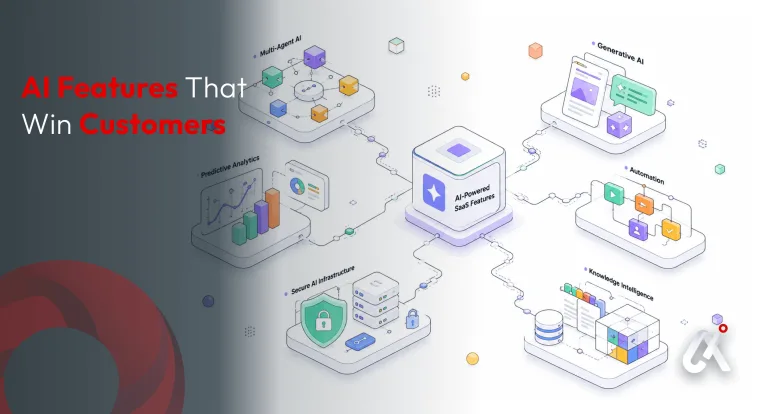
AI SaaS Features That Differentiate Your Product in 2026
The Software-as-a-Service (SaaS) industry in 2026 has crossed a critical threshold
-
Generative AI App Development: Transforming Web and Mobile in 2026
For forward-thinking CTOs, product managers, and enterprise decision-makers, staying competitive requires shifting away from legacy static architectures
-
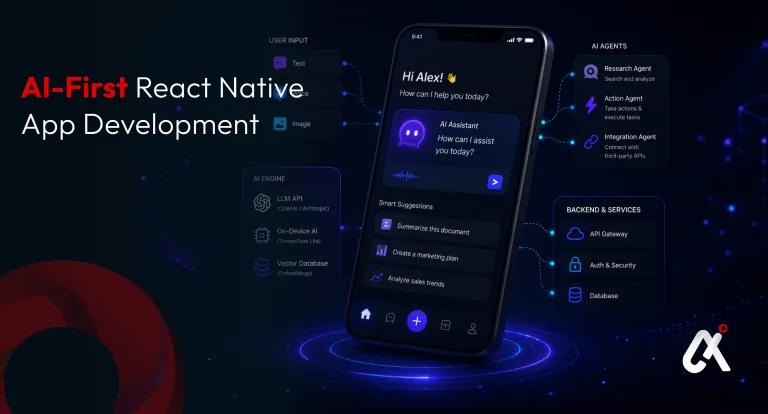
React Native AI: Building an AI-First Mobile App in 2026
A practical guide to AI-powered churn prediction, retention automation, and personalization for two-sided marketplace platforms