RPA Development Services for Work That Is Tedious Rather Than Difficult
Robotic process automation is at its best on a task with stable rules, a predictable input and no judgement in it. Our RPA development services start by establishing whether yours is that task, and the assessment ends in a recommendation not to automate often enough that the recommendation is worth something.
Book a Process Assessment 5.0
5.0 5.0
5.0 4.3
4.3 4.8
4.8What You Own at the End, and What Actually Breaks It
Automations do not fail because the logic was wrong. They fail because something upstream moved and nobody told the robot.
A well-built automation is a small, boring, extremely reliable piece of software that does one thing on a schedule and complains loudly when it cannot. What you own at the end is that, plus a written description of the process it encodes, the exception rules, the credentials arrangement and a run log somebody can read.
The reason automations degrade is almost always change elsewhere: a screen layout moves, a report gains a column, a supplier changes a file format, a login flow adds a step. That is the real cost of an automation estate and it is the number nobody quotes. So we quote maintenance before the build rather than after, because an automation whose upkeep exceeds the effort it replaced is a loss that takes a year to become visible.
If both systems have interfaces and nobody has connected them · If the process needs judgement rather than rules
Our Automation Team, in Numbers
The team and delivery record behind the automation work described here.
60+
AI Engineers
50+
AI Solutions Delivered
80+
AI-Integrated Workflows
30+
Industries Served
95%
Client Retention
Our RPA Development Services, and What Each One Covers
Each service below can be engaged on its own. The assessment is the one worth doing first, and it is the one that can end the conversation.
RPA Consulting and Process Assessment
We watch the process as it actually runs, map the rule-based steps against the judgement steps and count the exceptions. It can end in a recommendation not to automate, which happens on a meaningful share of assessments and is the reason the rest of this page is credible.
Attended RPA Bot Development
We build automation a person triggers and watches, sitting inside somebody’s working day. It suits a task somebody does dozens of times a day with a judgement call in the centre of it.
Unattended RPA Bot Development
We build automation that runs to a schedule without anybody present, typically overnight or between shifts, with exception handling that routes to a person the next morning. It suits batch work, reconciliations and report generation, where the input is complete before the run starts.
Custom Scripted Automation
We write the same job as maintainable code in your own environment, for estates where a licensed platform would cost more than the problem is worth. It suits a small number of automations, a technical team who can own them, and a licence cost that cannot be justified.
RPA Support and Maintenance
We keep automations working as the systems underneath them change, which they will, and report what broke and why. We quote this before the build, because it is the cost that decides whether the automation was worth having and the one most proposals omit.
RPA Estate Review and Optimisation
We take on an inherited set of automations and establish which still run, which quietly stopped, and which are being worked around by staff. It usually finds at least one everybody believes is running that is not, and at least one nobody needs any more.
RPA Projects We Have Delivered, and What Each One Replaced
Hours returned per month is the number, measured after the automation had been running long enough to break once and be fixed.
SaaS
Twelve Years of Attendance Software, From Paper Hours to Photo-Verified Punches
Twelve years on a single product. Paper hours and buddy punching gave way to GPS and photo-verified records, with payroll-ready reporting for businesses running up to several hundred employees.
Read case study: Twelve Years of Attendance Software, From Paper Hours to Photo-Verified PunchesRetail
Retail Execution Software That Replaced Spreadsheets With GPS-Verified Visit Proof
Trade marketing lives or dies on whether the visit actually happened. Force replaced spreadsheet visit logs with GPS-verified capture, so a brand can prove its promoter stood in the outlet it paid for.
Read case study: Retail Execution Software That Replaced Spreadsheets With GPS-Verified Visit ProofHow the Automations Landed, in Clients’ Words
In their own words, on platforms that verify an engagement before publishing.

We have contracted a developer from Aipxperts now for several months, based on a referral. We have been very pleased with the quality of the work, the knowledge and skill level of our developer, and the value we're receiving for our fee. We also very much appreciate that the development team works at night (effectively), so we are sometimes able to turn client requests around in a day.There have been a couple of situations where we needed urgent help outside of our developer's normal business hours, and we've received that help (for which I am very grateful). While we have some challenges with communication sometimes, our overall satisfaction level is very high.

Our experience working with Aipxperts has been exceptionally satisfying. From start to finish, they handled the project with professionalism and responsibility. Communication was seamless, and they effectively addressed our requirements, delivering high-quality results on time. Their technical expertise was particularly impressive, as they effortlessly solved complex problems. We highly recommend Aipxperts for their outstanding service and dedication to client satisfaction.
RPA Development by Industry, and Where It Should Not Go
Each entry names the RPA work we most often deliver in that industry, the process that automates well, and the one that usually should not.
Fintech and financial services
Reconciliation, statement processing and regulatory report assembly automate extremely well because the rules are written down somewhere already. Anything involving a judgement about a customer does not, and in fintech and financial services the audit trail requirement is heavier than elsewhere.
Logistics and warehousing
Carrier document handling, proof of delivery filing and rate reconciliation, where inputs arrive in whatever format a partner chose. In logistics and warehousing, exception volume is the deciding factor and it is usually higher than the operations team estimates.
Manufacturing
Production reporting, quality documentation and supplier paperwork. What does not automate on a manufacturing site is anything reading a system with no stable interface, where a screen layout changes with each vendor update.
eCommerce
Marketplace order reconciliation, returns paperwork and listing maintenance across platforms that each expect a different file. In eCommerce the access constraint shapes the design more than the process does, because a robot needs an identity and a permission set like anybody else.
Energy and utilities
Meter data handling, billing exception processing and regulatory submissions on a fixed calendar. Predictable timing makes unattended runs unusually well suited to energy and utilities.
Retail
Supplier price file processing, promotion setup and stock adjustment paperwork across store systems. The seasonal exception spike is the thing to design for in retail, because a process that is stable in March is not in November.
Education and EdTech
Enrolment administration, records transfer and timetable data handling, concentrated brutally into a few weeks a year. That concentration is precisely why automation pays in education and EdTech, and also why an automation that breaks at the wrong moment is expensive.
Why Choose Aipxperts for RPA Development
Every RPA development company promises savings. These are the specific things we do differently, and several of them exist to stop you commissioning something you should not.
01You get an honest answer on whether to automate at allWhen exception volume is high, when the process changes often, or when the underlying system has an interface nobody has used, automation is the wrong instrument. We would rather say so in the assessment than build something that needs replacing in a year.
02You only pay for a licence where it earns its costPlatform licences are a recurring cost and they are worth it at a certain scale and not below it. Where a handful of automations would run fine as maintainable code in your own environment, that is what gets recommended. We resell nothing, so the recommendation costs us nothing to make honestly.
03You see the maintenance cost before you commit to the buildThe upkeep figure sits next to the build figure in the proposal. It is the number that determines whether the automation is worth having, and putting it in front of the decision rather than behind it is the single most useful thing a supplier can do here.
04Exceptions reach a person, never a guessAn automation that encounters something it does not recognise stops and escalates. It does not approximate, and it does not proceed on a best guess. This is deliberate and it is why these automations are boring, which is the correct quality for software that touches your finance systems.
05We tell you when this is the wrong service, or we are the wrong supplierIf both systems have proper interfaces, an integration is cheaper and far more durable than a robot pretending to be a person. If the process requires judgement, it is not this. And if you need automation at the scale of hundreds of processes with a dedicated centre of excellence, a specialist automation firm is a better fit than we are.
RPA, an AI Agent, or an Integration: Which One the Process Needs
Different approaches get proposed for the same brief and they differ enormously in cost, durability and risk. The table sorts them, and the answer is more often an integration than this page’s own subject.
| RPA | An AI agent | An integration | |
|---|---|---|---|
| Works by | Following fixed rules through an interface built for people | Deciding what to do, then doing it | Systems talking directly through their own interfaces |
| Needs | A stable process and a stable screen | Judgement, plus strong controls on what it can reach | Both systems to expose an interface |
| Fails when | Anything upstream changes shape | The judgement is wrong and nobody notices | Rarely, and visibly when it does |
| Durability | Fragile by nature | Depends entirely on the controls | The most durable of the three |
| Right when | No interface exists and the rules are fixed | The rules genuinely cannot be written down | An interface exists, which is more often than people check |
| Relative cost | Low to build, recurring to maintain | Highest total, mostly in controls | Higher to build, lowest to keep |
01The fourth and fifth rows are where money is actually lostNeither is a technology mistake. An automation costing more to maintain than the work it removes is a common outcome and an entirely predictable one, because the volume was knowable before anyone built it.02The third row is the one an RPA supplier is least likely to raiseIntegrations are somebody else’s line item. If both ends have an API, the automation should not exist.
The RPA Tech Stack We Build On
The automation platforms and scripting tools our engineers build on, including the code-based route for estates where a licence would cost more than it returns. Where you already hold a platform licence, we build on yours rather than proposing another.
RPA platforms and frameworks
 UiPath
Intelligent document processing
 Amazon Textract
 Google Document AIAzure AI Document IntelligenceABBYY VantageABBYY FlexiCaptureUiPath Document UnderstandingAutomation Anywhere Document AutomationTungsten TotalAgilityRossumNanonets
AI and machine learning integration
 Python
 scikit-learn
 PyTorch
 TensorFlow
 spaCy
spaCy Hugging Face Transformers
 Azure OpenAI ServiceAmazon BedrockGoogle Vertex AI
 ONNX Runtime
Process mining and discovery
CelonisUiPath Process MiningUiPath Task MiningPM4Py
Scripting and custom development
Python C# and .NETVB.NETVBA
 PowerShell
 JavaScript
 TypeScript
 JavaSQL
 Selenium
 Playwright
API and integration
RESTSOAP GraphQLOpenAPIWebhooks
 Apache Kafka
 RabbitMQ
 MuleSoft Anypoint
 SAP BAPIRFC and OData
 Salesforce APIsServiceNow APIs
 Microsoft Graph API
Cloud and deployment
AWSMicrosoft AzureGoogle Cloud Docker
 Kubernetes
 Terraform
 Jenkins
 GitHub Actions
 Azure DevOps
 CitrixVMware Horizon
Security and compliance tooling
CyberArk HashiCorp VaultAzure Key VaultAWS Secrets ManagerMicrosoft Entra IDActive Directoryrole-based access controlTLS and AES-256 encryption
Monitoring and bot management
UiPath Orchestrator Grafana
 Prometheus
 Elastic Stack
 Splunk
 DatadogServiceNow ITSM
Ratings From Long-Running Clients
Published on Clutch, GoodFirms, Upwork and Google, across more than a decade of web, mobile and enterprise delivery.
Credentials, Identity and Auditability on Automation Work
An automation holds credentials and acts inside your systems, so what it runs as and what it leaves behind are contract matters rather than implementation details.
All four are settled before the first build and written into the engagement document rather than configured quietly by whoever sets up the environment.
The automation runs as its own identity, never as a personIts own account, its own permission set, its own name in the audit log. Automations running under an employee’s credentials make an audit trail unreadable and leave a person accountable for actions they did not take.Where the credentials liveIn your vault or your platform’s credential store, never in a script, never in a configuration file, and never in a document. Rotation is your process and the automation is built to survive it.What the run log recordsEvery run, its outcome, every exception raised and what happened to it. Readable by your team without asking us, because a log only your supplier can interpret is not an audit trail.Access when the engagement endsOurs is revoked, the automation keeps running under its own identity, and your team holds the documentation to change it. Nothing about the arrangement requires our continued involvement.Accreditation, and what is inspectable insteadAipxperts holds neither ISO 27001 nor SOC 2, and holds no automation vendor accreditation. What is inspectable during the engagement is the identity model, the credential handling and the run log, which are the three things an auditor actually asks about on automation work.
Our RPA Development Process, and What Breaks It at Each Stage
Every stage names the thing that goes wrong there, because on automation work the failures are unglamorous and entirely predictable.
01Watching the processWe observe the process as performed rather than as described, by more than one person if more than one person does it. This is where you discover that two people do it differently and both believe theirs is the process.02Rule extraction and exception countingWe write down what the rules actually are and count how often reality departs from them. The exception rate is what breaks projects here: above a certain level an automation spends its life escalating and returns nothing.03Interface checkWe check whether the systems involved have a proper interface nobody has used. Quite often the answer is yes, and the engagement usefully becomes an integration instead.04Identity, credentials and permissionsWe provision the automation’s own account, scoped to what the process needs and nothing beyond it. Provisioning is where this stalls, because an account for a non-human is a category most access processes have no route for.05Build and exception designWe build the automation itself, plus what it does with everything it does not recognise. The temptation to handle an exception automatically is the risk here, and every one of those becomes an incident eventually.06Parallel runWe run the automation and the person on the same work, comparing outputs rather than assuming they match. What surfaces is differences that turn out to be the person having been right, which is common and worth catching.07Handover, monitoring and the maintenance agreementWe hand over documentation, run monitoring and an agreed arrangement for what happens when an upstream system changes. Nothing breaks here immediately: this is the stage whose absence costs you in eight months rather than eight days.
Practical Questions Before Automating Anything
The answer on suitability ends more enquiries than the rest combined, and it saves the caller the most money when it does.
Share your project vision
Tell us what you want to build. A specialist, not a salesperson, replies.
Send One Process and Find Out Whether Automation Is the Right Answer
Describe one task somebody does repeatedly, roughly how long it takes and how often something unusual happens. Back comes whether it suits automation, whether an integration would be better, and what the maintenance would realistically cost once it exists.
Send One ProcessNotes From Automations in Production
Process assessments, exception handling and the maintenance realities behind bots our engineers put into production.
-
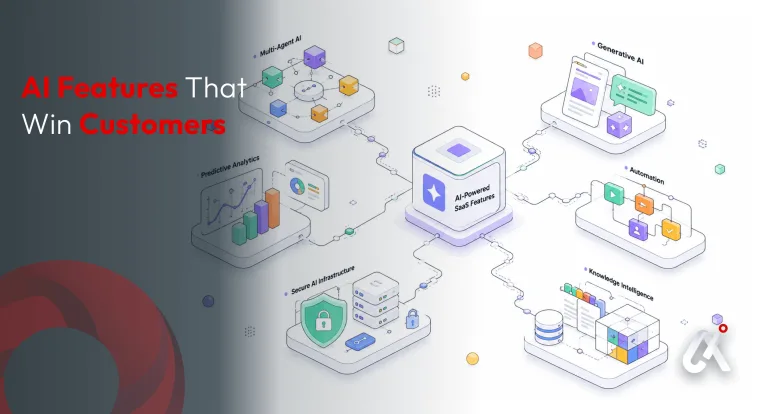
AI SaaS Features That Differentiate Your Product in 2026
The Software-as-a-Service (SaaS) industry in 2026 has crossed a critical threshold
-
Generative AI App Development: Transforming Web and Mobile in 2026
For forward-thinking CTOs, product managers, and enterprise decision-makers, staying competitive requires shifting away from legacy static architectures
-
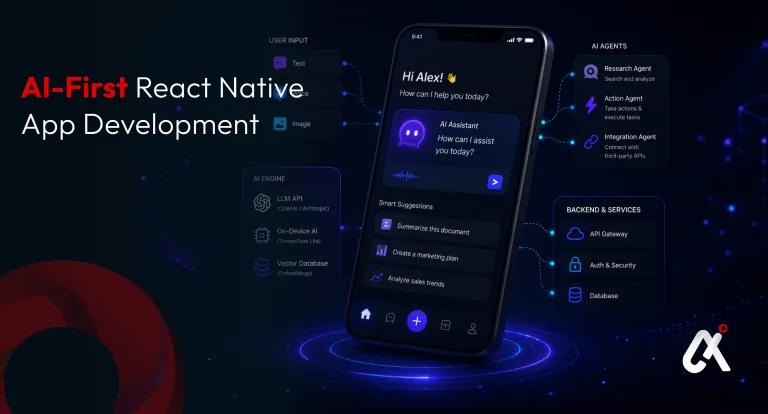
React Native AI: Building an AI-First Mobile App in 2026
A practical guide to AI-powered churn prediction, retention automation, and personalization for two-sided marketplace platforms