AI Governance Consulting That Starts by Finding the Systems Nobody Registered
Almost every organisation running AI is running more of it than its own register shows: a model in a product team, an assistant embedded in a tool somebody bought, a script that quietly became a decision. AI governance consulting that starts anywhere other than the inventory is governance of a subset.
Start With an Inventory 5.0
5.0 5.0
5.0 4.3
4.3 4.8
4.8What This Team Is Accountable For, and What It Refers Out
AI governance is a market where the boundary between advice, engineering and certification is routinely blurred. Ours is stated before anything else.
What we do is technical. Find the AI systems, classify them by what they actually decide, build the evaluation and logging that produce evidence, design the human oversight points, and assemble the technical documentation an assessor or a regulator will ask for. It is engineering work, done by people who build these systems rather than by people who read about them.
What we do not do is certify. We are not a notified body and we are not an accredited certification body. We can produce the technical evidence that goes into a conformity file; somebody else signs it. Legal interpretation of your obligations is your counsel’s work, and where a governance programme needs a major firm’s opinion on the law, we will say so rather than improvise.
If the systems are still being decided rather than governed · If what is wanted is control testing rather than an AI framework
Our AI Governance Team, in Numbers
The team and delivery record behind our governance programmes.
60+
AI Engineers
50+
AI Solutions Delivered
80+
AI-Integrated Workflows
30+
Industries Served
95%
Client Retention
The Engagements, Each One Startable on Its Own
Discovery is a prerequisite for the rest in practice, though clients regularly try to start with the evaluation suites.
AI System Discovery and Model Inventory
We find what is actually running: models your teams built, models inside tools you bought, and the scripts that have quietly become decision-makers, each with an owner, a purpose and what it decides. You get a register somebody can be held to, and usually a gap between it and the previous one.
Risk Classification and Obligation Mapping
We sort the inventory by what each system decides about whom, then map each entry to the obligations that actually attach to it rather than to the whole regime. What comes out is a shortlist: most systems in most inventories carry light obligations, and knowing which do not is as valuable as knowing which do.
Evaluation Suites for Bias, Robustness and Drift
We build test sets and harnesses that run against your models on a schedule, producing evidence rather than assurances. You end up with a measurement over time, which is the only form of evidence that survives a follow-up question.
Human Oversight and Approval Gate Design
We design where a person has to be in the loop, what they see when they are, and what they are actually able to change. Oversight that cannot alter an outcome is documentation rather than control, so you get gates built into the system, plus an honest note about which existing ones are decorative.
Decision Logging and Data Lineage
We record what was decided, by which model version, on what input, and where that input came from, built to be retrieved on request rather than reconstructed under pressure. The result is a record that turns a difficult question into a query.
Generative and Agentic System Controls
We govern the newer surface: prompt handling, output constraints, action limits, spend caps and what stops a running system. These need different controls from a scoring model and are frequently governed as though they were the same, so what you get is controls matched to systems that act rather than to systems that predict.
Technical Documentation for a Conformity File
We assemble the technical evidence an assessor expects, in the structure they expect it. That produces the file contents, not the sign-off, which comes from a body we are not.
Governance Work, and What the Inventory Turned Up
The number worth looking for on each card is systems found against systems previously known. That gap is the argument for doing discovery before anything else.
Education
Classroom Walkthrough Software Used by School Leaders Across 10+ Countries
Instructional coaching only works if the loop closes while the lesson is still fresh. Seven years of building later, school leaders across more than ten countries return structured feedback the same day.
Read case study: Classroom Walkthrough Software Used by School Leaders Across 10+ CountriesMarketplace
An AI Freelance Marketplace Platform That Turns Site Audits Into One-Click Hires
Nine years with one client, and the most recent phase changed what the product is. Legiit went from listing gigs to telling a business what is wrong with its website and which seller can fix it.
Read case study: An AI Freelance Marketplace Platform That Turns Site Audits Into One-Click HiresFeedback From Clients After an Inventory
Published on platforms that verify an engagement before a review is posted.

Our experience working with Aipxperts has been exceptionally satisfying. From start to finish, they handled the project with professionalism and responsibility. Communication was seamless, and they effectively addressed our requirements, delivering high-quality results on time. Their technical expertise was particularly impressive, as they effortlessly solved complex problems. We highly recommend Aipxperts for their outstanding service and dedication to client satisfaction.

Hardik was very helpful in advice and completing the work.
How Deep the Governance Has to Go in Your Sector
Depth is set by what your AI systems decide about people, and that varies enormously between sectors that otherwise look similar.
Fintech and financial services
Systems that affect access to credit or pricing sit at the demanding end, and the obligation is usually explanation rather than accuracy. We most often build the explanation and bias evidence a credit or pricing model has to produce on request across fintech and financial services, because a model that is right and cannot be explained is a problem here in a way it is not elsewhere.
Healthcare administration
Anything touching triage, prioritisation or access to a service carries a heavy oversight requirement, and the person in the loop has to be able to override rather than merely observe. We usually start with those approval gates and the decision logging behind them for healthcare administration systems.
Education and EdTech
Systems affecting assessment, progression or admission, with a user base that may include children. We settle the consent position and the oversight position together rather than sequentially, and document both, for education and EdTech platforms.
Food delivery
Automated allocation and scoring that affects couriers puts these systems in the category regulators and works councils look at hardest. We usually build the drift monitoring and the appeal path first for food delivery platforms, because a small error rate applied to millions of assignments is a governance problem regardless of the model’s quality.
Energy and utilities
Models adjacent to operational systems, where the governance question is what a model is permitted to influence rather than what it predicts. We establish the boundary between advisory and controlling and enforce it in the pipeline for energy and utilities operators.
Automotive and dealer networks
Obligations arrive contractually down a supply chain rather than from a regulator, so the specification is a manufacturer’s requirement document that changes without notice. We map those requirements onto a single control set for automotive and dealer networks, so a change lands in one place rather than several.
Logistics and warehousing
Automated decisions affecting workers, routing and allocation. Where a system influences how people are scheduled or measured the oversight requirement is heavier than most operators expect, so we begin with the human oversight design and the decision log for logistics and warehousing.
Why Choose Aipxperts Over a Large Consultancy
Differences that matter when you are weighing us against a large consultancy, plus one honest referral. That referral is the most useful thing on this page for a certain kind of client.
01You get controls written by the engineers who ship the modelsGovernance written by people who do not build these systems produces policies engineers route around. Ours are designed by the same engineers, which makes them implementable and occasionally makes them less comfortable to read.
02You maintain one control set instead of three overlapping onesOrganisations answering to a regulation, a customer questionnaire and an internal policy end up maintaining three overlapping frameworks. One control set with multiple tags is less work to maintain and far easier to evidence.
03You find out which controls the system actually enforcesThe gap between a control that is documented and a control the system actually enforces is where governance programmes fail an inspection. We test which is which and we write down the difference rather than reporting the policy.
04You can answer a question about an old decision in minutesIf answering a question about a decision from four months ago requires an engineer and a week, the evidence does not really exist. Logging is designed so the answer is a query.
05You get told when a larger firm is the right callIf what you need is a legal opinion on how a regulation applies to your business, or a certification, or a board-level assurance signature, that is a law firm or an accredited body. We will say so on the first call. What we are good at is the technical layer underneath whatever they tell you.
The EU AI Act Obligations Live Right Now, and Those Deferred
The timetable moved in 2026 and a great deal of published advice has not caught up. Everything below was re-verified against primary reporting on 17 August 2026. If you are reading this substantially later, check the dates before relying on them.
| Obligation | Status as at 17 August 2026 |
|---|---|
| Transparency duties under Article 50 | Applying now. Took effect 2 August 2026 and were largely untouched by the Digital Omnibus |
| Marking of synthetic content under Article 50(2) | Systems placed on the market before 2 August 2026 have until 2 December 2026 |
| High-risk systems listed in Annex III | Deferred to 2 December 2027, roughly sixteen months later than originally scheduled |
| High-risk systems under Annex I | Deferred to 2 August 2028, one year later than originally scheduled |
The Tooling Behind Evaluation and Evidence Work
The evaluation, logging, lineage and documentation tooling our engineers use on governance work. Where you already run model or experiment tracking, the controls are built into yours rather than beside it.
Evaluation and Testing
RagasDeepEval Weights & Biases
 MLflowand custom evaluation harnesses built on your own cases
Bias, Explainability and Interpretability
SHAPLIMECaptummodel cards and documented data lineage
Drift and Performance Monitoring
Evidently AIArizeWhyLabsFiddler AIArthur AI
Pipeline Gates and CI
 GitHub Actions
 Azure DevOps
 JenkinsMLflow Model RegistryKubeflow
Logging, Lineage and Audit Evidence
 OpenTelemetry
 Prometheus
 Grafana
 DVCimmutable decision logs
Policy and GRC Platforms We Integrate With
Credo AIHolistic AITrustibleMonitaur IBM watsonx.governanceOneTrust AI GovernanceServiceNow AI Control TowerCollibra
Cloud and Deployment
 AWS
AWS Microsoft Azure
 Google Cloud
 Docker
 Kubernetes
 Terraform
Where Our AI Governance Reviews Are Published
Held on Clutch, GoodFirms, Upwork and Google, across web, mobile and enterprise delivery since 2012.
Your Models, Your Evidence, and What This Team Can Sign
Governance work reads model behaviour, training data and decision logs. The controls below apply throughout, and the one clients most need stated is that we assemble evidence rather than certify it.
The regimes the control language comes from
The NDA is signed before discovery. Assessment runs inside your environment where your policy requires it, and model weights, training data and evaluation sets do not cross your boundary without written authorisation. Frameworks and deliverables produced during the engagement assign to you.
Your data and your model intellectual propertyTraining data, model weights, evaluation sets and decision logs stay in your environment. Access is read-only, named and time-boxed to the engagement, and nothing is retained afterwards unless you ask.What the evidence has to surviveIt is built assuming it will be read by somebody adversarial who was not in the room. That standard is higher than internal reporting and it is the standard that makes the difference at an inspection.Where the report can goYours to share with a regulator, an assessor, an insurer, a customer or a board. We attach no conditions to its circulation and we do not name clients alongside governance findings without written consent.On certification, and the answer clients want firstAipxperts is not a notified body, not an accredited certification body and not a conformity assessment body, and holds neither ISO 27001 nor SOC 2 itself. We produce technical evidence that goes into a conformity file. The sign-off comes from somebody else, and any supplier suggesting they can provide it is describing something that does not exist.
What actually applies right now
Verified 13 August 2026. These dates need a named review owner and a re-check every quarter, because the deferrals moved once already this year.
| Obligation | Status as at 13 August 2026 |
|---|---|
| Digital Omnibus on AI | In force since 27 July 2026, following publication in the Official Journal on 24 July. |
| Article 50 transparency | Applying since 2 August 2026. Not deferred by the Omnibus. |
| Article 50(2) machine-readable marking | Grace period to 2 December 2026, but only for generative systems already on the market before 2 August 2026. Anything deployed on or after that date complies immediately, so for a new AI feature the duty is live now. |
| Annex III high-risk obligations | Deferred to 2 December 2027: biometrics, employment, credit scoring, education, critical infrastructure. |
| Annex I embedded-product high-risk | Deferred to 2 August 2028: AI inside products already covered by sectoral safety legislation. |
Read the third row twice. Deferral got the headlines and the transparency duty did not move, so the nearest live obligation for most teams is a disclosure requirement already in force.
The Steps of a Governance Engagement, and the Limit of Each One
Every stage names what it does not cover, because on governance work the overclaim is the risk.
01Discovery and inventoryFinding the AI systems, including the ones inside purchased tools and the scripts that became decision-makers. The limit is that we find what your environment and your people reveal: a system nobody mentions and nothing logs stays hidden, so the inventory is a floor rather than a certainty.02Classification by what each system decidesSorting by effect on people rather than by technical sophistication, which is the sorting that obligations actually follow. Classification is a technical judgement, and where it carries legal consequences your counsel confirms it.03Obligation mappingTagging each system to the specific duties that attach to it, from regulation, contract or internal policy. We map to obligations as written; interpreting an ambiguous one is legal work, and we will say when we have hit one.04Gap assessment against runtime realityWhat the documentation says the controls are, against what the systems actually enforce. We test what is testable: controls that depend on human behaviour are assessed by interview, which is weaker evidence, and we mark them as such.05Evaluation and logging buildTest suites, drift monitoring and decision logging built into the systems on a schedule. An evaluation suite measures what it was built to measure, so new failure modes need new tests, which is why the suite is owned rather than delivered.06Oversight and control implementationApproval gates, action limits and the mechanisms that let a person actually intervene. A gate only works if the person behind it has time and authority; where they have neither, we will say the control is nominal.07Evidence assembly and handoverThe documentation set, structured for the audience that will ask for it, with your team able to maintain it. This is assembly, not attestation: we do not sign it, and nobody should represent our involvement as approval.
What Comes Up on a Governance Scoping Call
Most callers need the answer on scope. The answer on what we cannot sign is the one that decides whether we are the right firm.
Share your project vision
Tell us what you want to build. A specialist, not a salesperson, replies.
Start With the List of AI Systems You Think You Have
Send whatever register exists, however incomplete, along with the questionnaire or the obligation that prompted this. Back comes what an inventory would involve, roughly where the gaps usually sit in an organisation like yours, and whether an inventory on its own is the right starting point before anything larger.
Send Your AI RegisterGovernance Notes From Live Programmes
Inventory findings, obligation mapping and evidence design, written up by the engineers who ran the programmes.
-
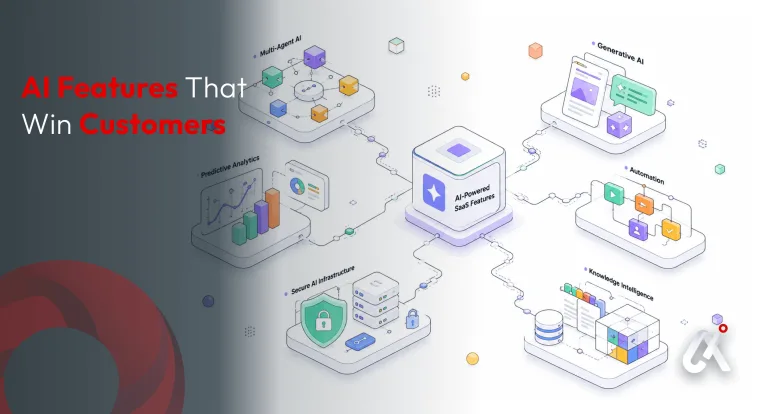
AI SaaS Features That Differentiate Your Product in 2026
The Software-as-a-Service (SaaS) industry in 2026 has crossed a critical threshold
-
Generative AI App Development: Transforming Web and Mobile in 2026
For forward-thinking CTOs, product managers, and enterprise decision-makers, staying competitive requires shifting away from legacy static architectures
-
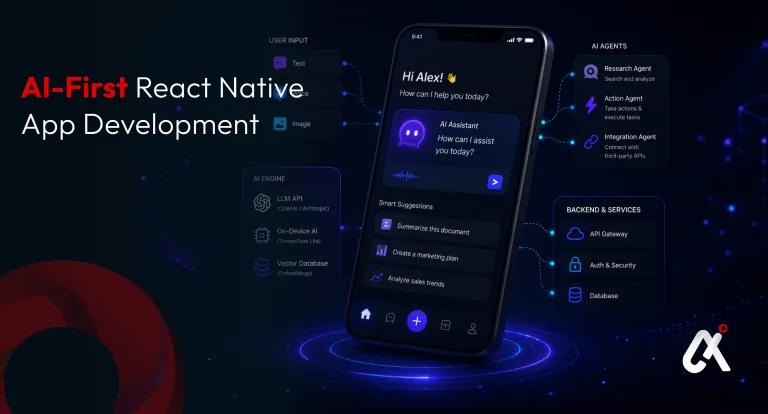
React Native AI: Building an AI-First Mobile App in 2026
A practical guide to AI-powered churn prediction, retention automation, and personalization for two-sided marketplace platforms